Ostrich Leg Leather for Slim Bifold Wallet Exteriors: A Guide
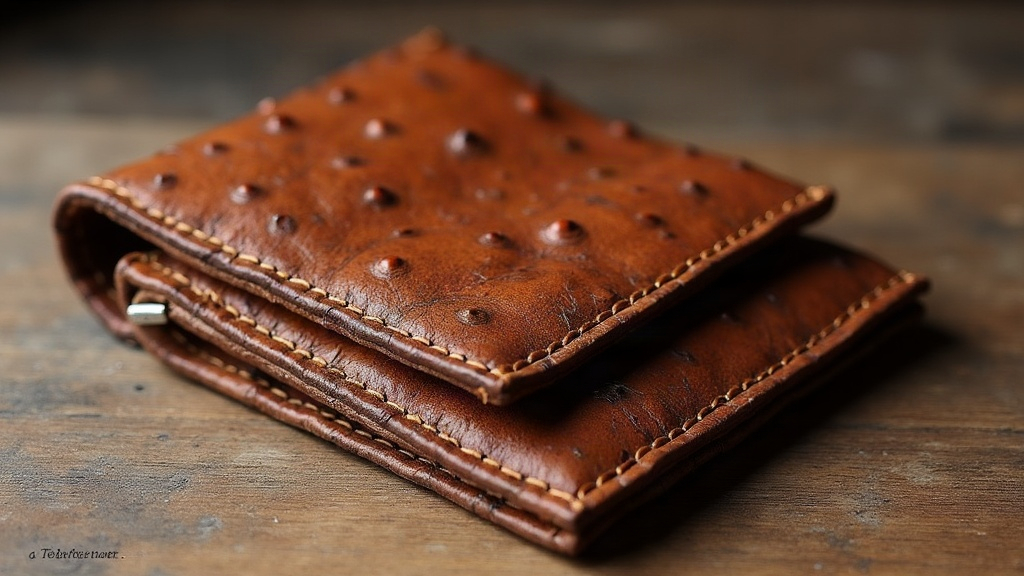
Ostrich leg leather doesn’t get nearly enough credit as a slim bifold wallet material. It’s tougher than the quill-covered body hide, carries its own natural texture without any embossing tricks, and costs a fraction of what full ostrich skin runs. If you’re a leather crafter or small-batch wallet maker hunting for something durable and visually distinctive, this stuff deserves a real look.
What Makes Ostrich Leg Leather Different
Once tanned, ostrich hides split into two usable sections: the body, famous for its raised quill follicles, and the legs, which carry a tight, overlapping scale pattern that looks almost reptilian but feels softer and more organic in hand. The legs are a high-wear zone on a living bird, so the leather there is naturally denser and more abrasion-resistant than the body hide ever gets.
Key characteristics:
- Natural scale texture. No two panels match. Every wallet ends up with its own surface fingerprint.
- High tensile strength. That skin spent its life absorbing ground contact and constant movement, so it resists stretching and tearing far better than you’d expect.
- Thinner usable panels. Legs are narrow limbs, not broad flanks, so you’re working with smaller cuts, usually 4 to 8 inches of usable width. That happens to be exactly the size a slim bifold panel needs.
- Lower cost than body ostrich. Without the quill pattern that luxury buyers chase, leg leather typically runs 30 to 50 percent cheaper per square foot.
Why It Works So Well for Slim Bifolds
A slim bifold needs material that’s thin, structurally stable, and doesn’t pile up at the fold. Ostrich leg leather hits all three marks, and here’s how:
- Natural thinness. Most tanneries skive it down to 1.0-1.4mm, which is right where you want an exterior panel to sit without adding bulk.
- Fold-friendly scales. The scale pattern flows in one direction. Orient your panels right and the fold line lands between scale rows instead of cutting across them. Less cracking down the road.
- Self-structuring surface. The raised scales give the leather its own rigidity, so you can often skip the heavy interfacing or backing layers that would otherwise bulk up a slim design.
Sourcing Tips
- Buy leg panels on their own, not as part of a whole hide. Paying body-hide prices for a leg cut defeats the whole purpose of using this material.
- Ask specifically for “glazed” or “matte finished” leg leather, depending on what look your brand is going for. Glazed finishes make the scale pattern pop; matte keeps things subtler.
- Check scale consistency across the panel. Sections near the foot have small, tight scales. Upper-leg cuts show bigger, more dramatic texture. Pick based on the finished look you want.
- Order a bit extra, a few square inches beyond your pattern size. Leg hides tend to have irregular edges and natural creasing near the joints that you’ll end up cutting around anyway.
Cutting and Pattern Layout
Leg leather comes in narrow, curved pieces, so pattern efficiency isn’t optional, it’s survival:
- Lay your bifold exterior pattern along the straightest run of scales. This keeps seams invisible at the fold.
- Save the smaller offcuts for interior card-slot panels. Texture barely matters on hidden layers, so this is free material efficiency sitting right there.
- Test your fold direction on a scrap piece first. Fold scales against their natural lay and you’ll see stress lines show up fast, sometimes within a few flexes.
Finishing and Edge Work
Because of the scale ridges, edges on this leather can come out a little uneven. For a clean slim-bifold finish:
- Burnish slower and at lower heat than you would on smooth calfskin. Push too hard with heat and you’ll flatten the scale texture right at the edge where it matters most.
- Go with edge paint or a beveled edge instead of folding the edge over. Rolled edges look bulky once the scales get involved.
- A thin coat of gum tragacanth or beeswax holds up well against the natural oils that exotic leathers tend to carry.
Common Questions
Is ostrich leg leather as durable as body ostrich? Yes, often more so. It comes from a high-friction area of the bird’s body, so it was built to take abuse.
Does it patina over time? Mildly. You’ll see slight darkening and the scale sheen smooths out a bit with handling, the same way most exotic leathers age with daily use.
Can beginners work with it? Yes, with some practice. The scales are actually more forgiving than quill-pattern ostrich, since there’s no delicate follicle texture to worry about damaging while stitching or skiving.
Final Thoughts
Ostrich leg leather gives you durability, a texture nobody else has, and a workable thinness that fits slim bifold wallets almost perfectly. Source it smart, lay your pattern along the scale direction, finish the edges gently, and you’ll end up with wallets that look genuinely exotic without paying full-body ostrich prices for the privilege.