Alligator vs Caiman Leather for Small Hand-Stitched Card Wallets
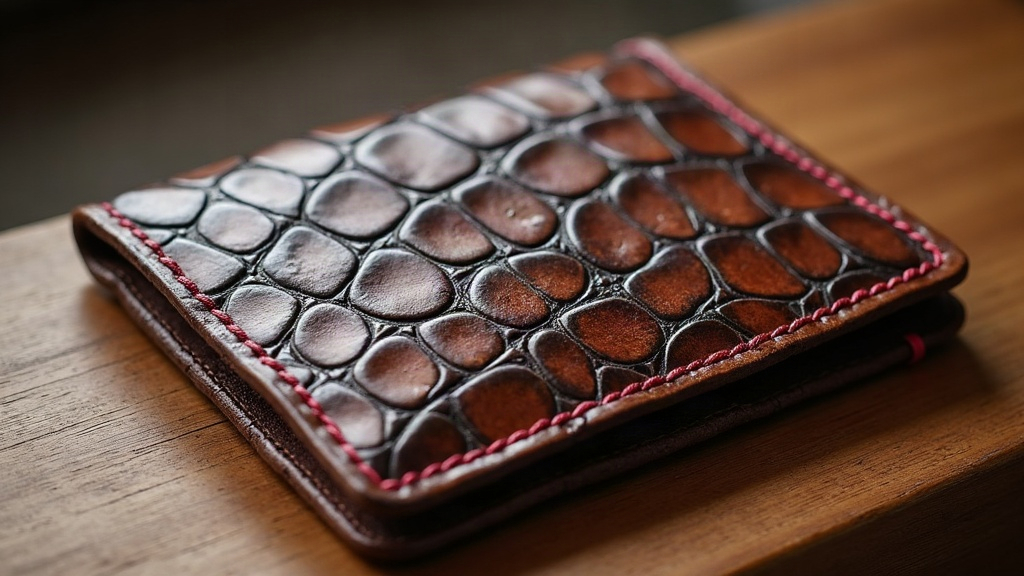
Choosing between alligator and caiman leather for a small hand-stitched card wallet really comes down to four things: scale size, grain uniformity, hide thickness, and your budget. Alligator gives you the smoothest, most refined grain and better consistency when you’re working with tiny panels. Caiman costs less, holds up slightly tougher, but its bumpier osteoderm “beading” can look a bit rough on something as compact as a card case. Here’s how the two actually compare, panel by panel.
Why Scale Size Matters More Than the Species Name
A card wallet typically needs panels no bigger than 4 x 3 inches (10 x 8 cm). This one detail, more than anything else, separates a great exotic card wallet from a mediocre one.
- Alligator hides carry large, flat, evenly spaced scales across the belly (what tanners call the “belly cut”), so even a small panel reads as clean and symmetrical, without any awkward scale cut-offs ruining the layout.
- Caiman hides run smaller in scale size and show more pronounced bony ridges, especially on the back and flank cuts. On a small panel that often translates into visible lumps or an uneven surface, unless whoever’s cutting the leather is picky enough to stick strictly to belly-only sections.
If you’re after that clean, jewelry-like look you see on luxury exotic wallets, alligator belly leather is the safer bet for small formats. No contest there.
Grain, Hand-Feel, and Finish
- Alligator belly: glassy, flat scales with a soft, almost waxy feel once finished. It takes dye and glazing beautifully, which is exactly why it dominates high-end accessory lines.
- Caiman belly: smaller, slightly raised scales that you can feel under your fingers. It still glazes up nicely, but it rarely matches the dead-flat finish alligator achieves.
- Caiman hornback/flank: bold, ridged pattern, visually striking, but too rough and stiff for the folded edges of a stitched card wallet.
For hand-stitching, flatter leather (alligator, basically) folds crisper and keeps your stitch lines straight along the edge. Caiman’s belly, being a touch stiffer and more textured, can still be stitched well, but you’ll find yourself skiving edges more carefully to keep bulk out of the folds.
Thickness and Workability for Hand-Stitching
- Alligator belly leather is usually tanned thinner and more supple, which suits multi-layer wallets (outer shell, card slots, liner) without piling up bulk at the seams.
- Caiman tends to run a touch firmer and slightly thicker even after splitting, which actually works in its favor if you want the wallet to hold its shape without adding an interior stiffener.
- Both need skiving at fold lines and stitch channels. Alligator is more forgiving for beginners since it compresses evenly under an awl; caiman takes a bit more practice.
Durability in Daily Use
- Alligator: excellent abrasion resistance, develops a nice patina over time, and resists cracking as long as you condition it now and then.
- Caiman: holds up comparably well, and some say it’s even slightly more scratch-resistant thanks to its firmer structure. That said, the raised scale edges can catch on pocket fabric and wear unevenly over years of use.
For a card wallet carried daily in a front pocket, honestly, both will last 5 to 10 years or more with nothing more than basic leather conditioner.
Price and Sourcing
This is usually what tips the decision:
- Alligator belly leather typically runs 2 to 4 times more per square foot than caiman belly. Blame tight farming regulations (mostly US/Louisiana and Zimbabwe/Florida operations) plus the CITES export paperwork involved.
- Caiman, especially Caiman crocodilus farmed widely across Colombia and Venezuela, is far more accessible, less tightly regulated, and noticeably cheaper. That’s why it’s a go-to for makers pricing wallets at a mid-range level.
- Both species require CITES documentation for legal international trade. Always ask your supplier for tags or certificates before buying.
Which Should You Choose?
- Go with alligator if you want the flattest, most premium-looking panel for a small item, you’re pricing the wallet as a luxury piece, and budget isn’t your main worry.
- Go with caiman if you want a genuinely exotic look at a friendlier price, you don’t mind being picky about sourcing belly-cut panels, and a little surface texture doesn’t bother you.
Conclusion
For small hand-stitched card wallets, alligator belly leather generally wins on grain refinement and ease of stitching. Caiman belly leather wins on price, and still delivers a genuinely exotic, durable result as long as it’s cut carefully from the belly. Either way: insist on belly-cut panels, skive your fold lines generously, and condition the leather every few months. The species matters less in the end than the quality of the cut and the care put into construction.