Hairline Creasing on Chrome-Tanned Leather with a French Edger
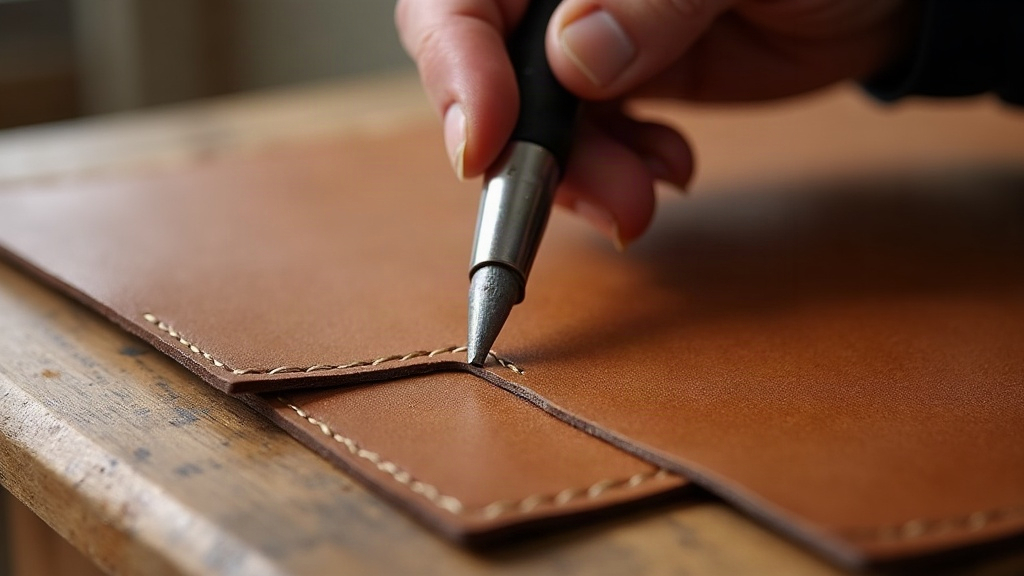
Hairline creasing sits near the top of the difficulty curve in leatherworking. You’re cutting a razor-thin, dead-straight groove just inside an edge, one that catches light the way a jeweler’s bezel line does. Pull it off on chrome-tanned leather, though, and you’re playing a different game entirely, because chrome-tan behaves nothing like veg-tan under heat and pressure. You’ll need a French edger, real heat discipline, and a sense of how the leather moves when you push into it. This guide walks through the full process for people who already have the fundamentals down and want their finishing work to look genuinely professional.
Why Chrome-Tanned Leather Is Different
Veg-tan is the default choice for creasing for good reason: it’s dense, it’s firm, and it holds a burnished line without much fuss. Chrome-tan is a different animal:
- Softer and more elastic, so it springs back after a crease instead of holding the line
- Less receptive to heat, since the chrome tanning process doesn’t set collagen fibers the way vegetable tanning does
- More prone to surface glazing, which can leave a crease looking flat or plasticky the moment you overheat it
So you can’t just lift a veg-tan creasing routine and apply it here. You need lower heat, more restraint, slower passes, and usually a second mechanical pass with the edger itself instead of leaning on heat to do all the work.
What Makes a French Edger Different from a Standard Creaser
A French edger (also called a French edge beveler, or fine-line creaser by some makers) departs from a standard wheel creaser in a few meaningful ways:
- It cuts a narrower, sharper groove, often under 1mm wide, exactly what you want for that hairline look
- The blade geometry is angled, not rounded, which produces a crisp shadow line instead of a soft furrow
- It’s hand-guided rather than wheel-rolled, meaning more control in your hands, but also a steeper learning curve
Because the tool actually shaves away a sliver of material instead of just pressing the surface down, it holds up far better on chrome-tanned leather than a heat-only creasing wheel ever could.
Step-by-Step: Hairline Creasing Chrome-Tanned Leather
1. Prepare the Edge
Sand and bevel the edge first with a standard edge beveler, then give it a light burnish. Skip this and your hairline will wander all over the place.
2. Dampen, Don’t Soak
Chrome-tan doesn’t tolerate the heavy water prep veg-tan shrugs off. A barely damp sponge is all you need, just enough to soften the grain without swelling the fibers underneath. Soak it and the crease will simply close back up as it dries, erasing your work.
3. Mark Your Guideline
Score a faint guide line with a stylus or the back of an awl, around 1.5 to 3mm from the edge (tighter for wallets, wider for belts and straps, depending on the scale of the piece).
4. Warm the French Edger Gently
Bring the blade to low-to-medium heat, cooler than you’d normally run for veg-tan. Always test on scrap first. If the surface starts to shine or bubble, back off immediately: chrome-tan scorches faster than you’d expect.
5. Draw the Line in Multiple Light Passes
Forget one heavy pull. Make 2 to 3 light passes along the guideline, nudging the pressure up slightly each time. This builds the groove in stages and keeps the leather from springing back on you.
6. Set the Crease with Pressure, Not Just Heat
Once you’ve made the final pass, run a bone folder (or the flat back of the edger) along the line with firm, steady pressure. This locks the fibers mechanically, which matters a lot here since chrome leather’s natural elasticity wants to undo your work.
7. Condition Lightly
Finish with a thin coat of conditioner to bring back suppleness, but don’t overdo it, or you’ll soften the crease you just spent ten minutes setting.
Common Mistakes to Avoid
- Too much heat, too fast: glazing, or worse, a scorched smell, especially noticeable on dyed chrome-tan
- One heavy pass instead of several light ones: inconsistent depth and a visible wobble in the line
- Skipping the mechanical set: the crease looks sharp fresh off the bench, then fades within a few days of handling
- Using veg-tan pressure habits on chrome-tan: this leather needs a noticeably lighter touch, every time
Tools and Materials Checklist
- French edger (ideally one with adjustable blade width)
- Low-heat source (alcohol lamp or adjustable creasing iron)
- Bone folder
- Edge beveler and burnishing cloth
- Light leather conditioner
- Scrap chrome-tanned offcuts for calibration
Final Thoughts
Hairline creasing on chrome-tanned leather isn’t really a test of raw tool skill. It’s a test of patience with a material that doesn’t want to cooperate. The French edger gives you the precision to cut a genuinely fine line, but the result depends on respecting chrome-tan’s lower heat tolerance and its stubborn elasticity. Gentle warmth, several light passes, a firm mechanical set, these are what separate a hairline that stays crisp for years from one that vanishes after a week of normal use. Run through scrap until your passes feel repeatable, then take that confidence straight to your actual project.